Mayra Pineda-Torres

Assistant Professor of Economics · Georgia Institute of Technology

NBER Faculty Research Fellow · IZA Research Affiliate

I am an Assistant Professor in the School of Economics at the Georgia Institute of Technology, an NBER Faculty Research Fellow, and an IZA Research Affiliate. I received my Ph.D. in Economics from the Department of Economics at Texas A&M University in May 2022.

My research interests are at the intersection of health economics, labor economics, and gender economics. I am mainly concerned with topics related to women's and teens' welfare. My current body of work studies the health and economic impacts of access to reproductive healthcare and the determinants of physician career choices.

Prior to graduate school, I was a Research Assistant at the Economic Research Division in Banco de México. I graduated from ITAM in 2015 with a B.A. in Economics.

Mayra Pineda-Torres
Reproductive healthcare physicians in ban vs protective states

Reproductive Healthcare Policy and Physician Career Decisions

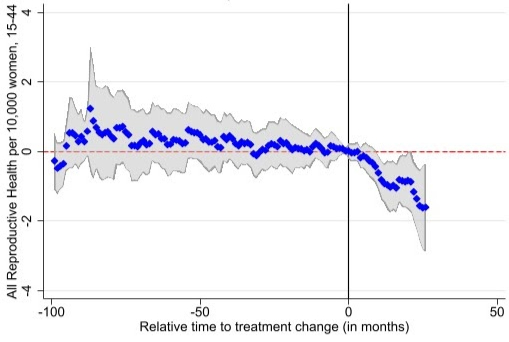
In the U.S., more than one-third of counties qualify as maternity care deserts, affecting over 5 million women of reproductive age. These areas often lack a sufficient healthcare workforce to meet patient needs. Policies affecting reproductive healthcare provision can influence who wants to become a physician, where they study, the specialty they choose, and ultimately, where they practice. In this paper, we study the causal effect of abortion bans following the 2022 Supreme Court decision in Dobbs v. Jackson Women's Health Organization on physician career decisions and explore its underlying mechanisms. Combining novel data sources and empirical approaches, we find modest increases in the number of unfilled residency slots in reproductive healthcare specialties and a 3% decrease in reproductive healthcare physicians practicing in ban states relative to states protecting abortion access. This work contributes to our understanding of how healthcare regulatory landscapes shape physician workforce development and distribution.

From Training to Practice: Physician Labor Market Entry, Geographic Mobility, and Reproductive Health Policy
We develop and estimate a structural model to study the extent to which reproductive health policy affects physicians' clinical labor market entry and geographic mobility at the transition from training to practice. We focus on the biggest reproductive policy change in the U.S. in the last 50 years: the Supreme Court decision in Dobbs, which transferred regulatory authority over abortion to individual states. We leverage a unique dataset of residents and fellows in New York State, interviewed at the precise moment of transition from training completion to practice. Our results indicate that Dobbs reduced immediate clinical labor-market entry among physicians in reproductive-care specialties by 4%, primarily through decreases in expected compensation. This work contributes to our understanding of how healthcare regulatory landscapes shape physician workforce occupational choices and geographic distribution.
Predicted increases in births by county

The Road Not Taken: How Driving Distance and Appointment Availability Shape the Effects of Abortion Bans
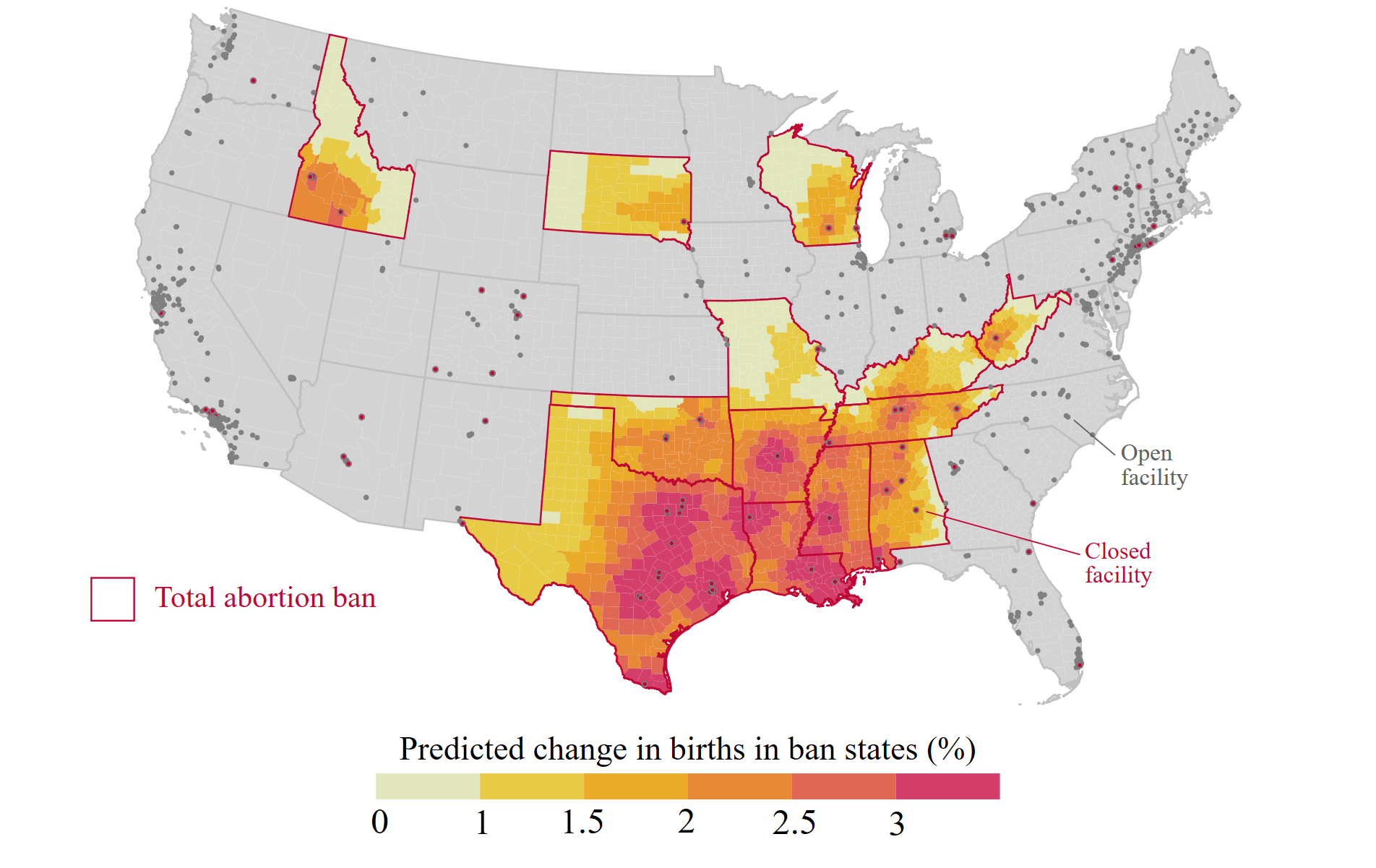
We use difference-in-differences research designs to estimate the effects of abortion bans on births at the county level, leveraging data on changes in driving distance and appointment availability at the nearest facility where abortion remains legal. We find that bans alone increase births, but their total impact depends on geographic barriers to access. Even in counties where distance and appointment availability remain unchanged, a total ban leads to a 1.0% increase in births, suggesting a chilling effect—potentially due to legal uncertainty, misinformation, or logistical hurdles—that is independent of measurable barriers. However, the effects grow substantially with travel burdens. In counties where the nearest abortion facility was 50 miles away pre-Dobbs, a total ban increases births by 2.8% when distance rises to 300 miles. Limited appointment availability in destination cities further amplifies these effects, resulting in an additional 0.4 percentage point increase in births. The largest increases occur among Black and Hispanic women, those without a college degree, and unmarried women. We do not observe evidence that the effects have diminished with time despite expanded logistical, financial, and telehealth abortion support, underscoring the persistent role that geographic barriers play in abortion access.
Share of childhood years receiving AFDC

The Unintended Welfare Consequences of Abortion Funding Restrictions

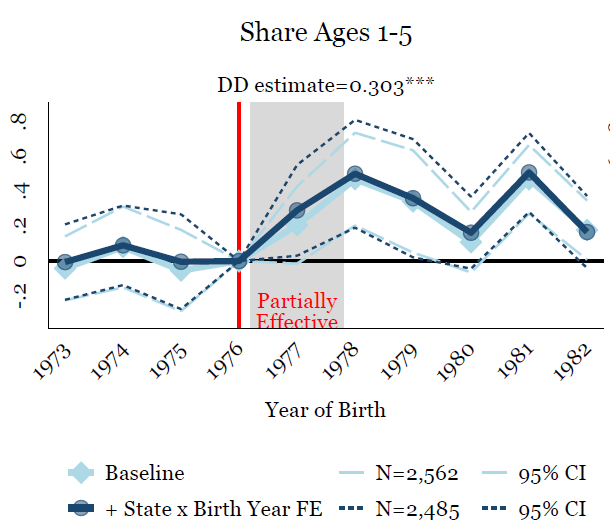
Do restrictions on public funding create unintended reliance on social assistance? In this paper, we study the Hyde Amendment, which eliminated federal Medicaid funding for abortion nearly 50 years ago. Exploiting variation across AFDC households and state-level funding declines, we find that the Amendment raised fertility among AFDC recipients by 19 percent, with the effect concentrated on the margin from one to two (or more) children. These additional children were raised in households with prolonged welfare dependence and higher transfer income throughout childhood. Our results illustrate how restricting access to one public program can lead to extended reliance on other programs.

Revisiting the Fertility Effects of Abortion Funding Bans
Public funding restrictions in the U.S. limit access to abortion services. In this paper, we study the 1976 Hyde Amendment, which barred federal Medicaid funding for abortion. Before Hyde, Medicaid paid for roughly 300,000 abortions, or a quarter of U.S abortions. Using a county-level event-study design, we find that fertility increased by 1.9% among women under 30 in counties with higher Medicaid eligibility after the Hyde Amendment. Fertility increased the most for unmarried women with existing children, the population most likely to be Medicaid-eligible. In Georgia, the only state reporting abortions by county, abortions fell by 9.6% at the average level of AFDC, enough to account for the additional births we observe. Today, nearly fifty years later, these restrictions through the Hyde Amendment still govern abortion coverage for one in five reproductive-age women.
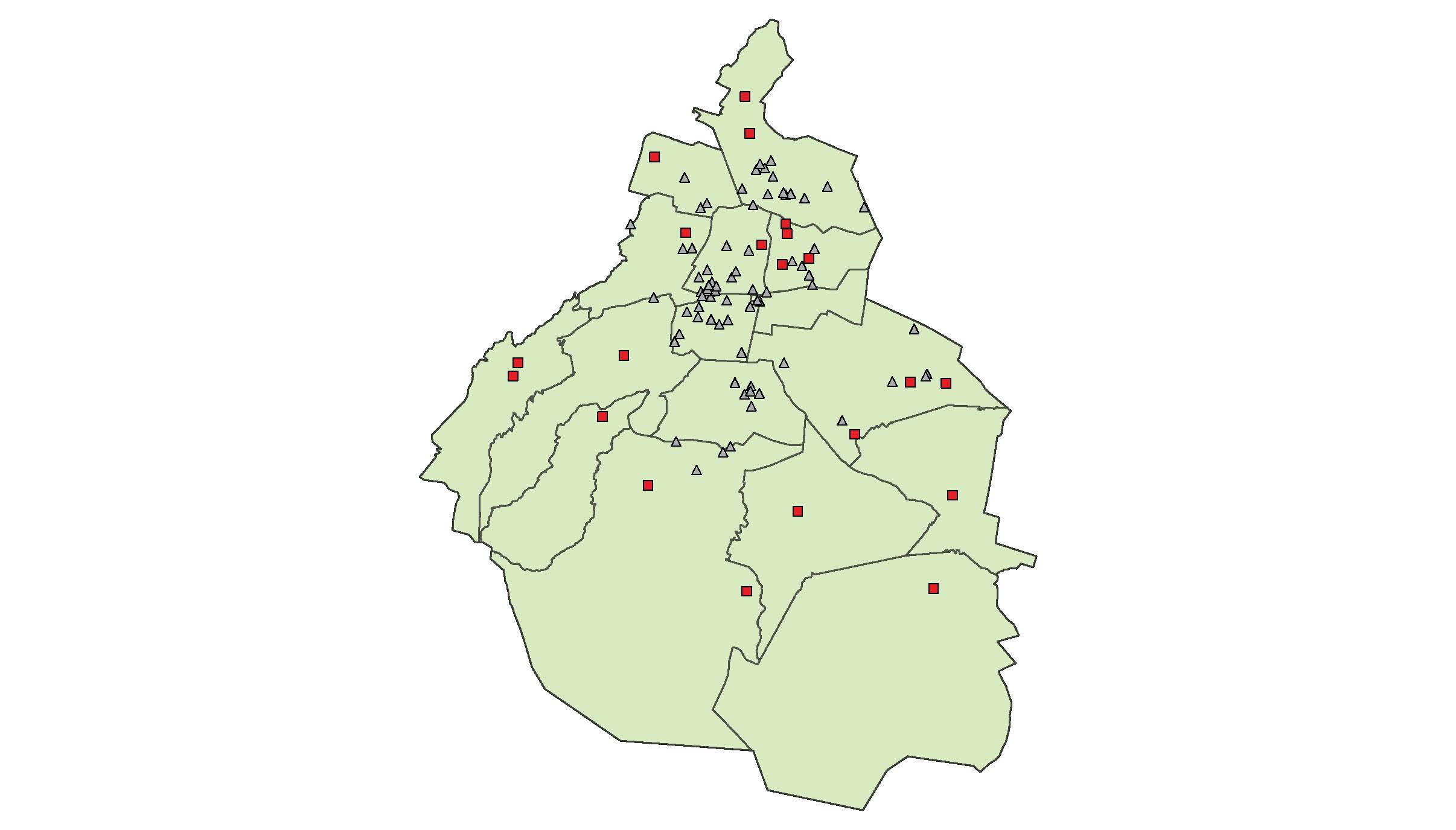
Distribution of facilities providing ILE service

Access to Abortion and Intimate Partner Violence, R&R

We study the impact of improved access to abortion on intimate partner violence (IPV) by exploiting variation in abortion access induced by the legalization of abortion in Mexico City in 2007. Using a difference-in-differences framework and individual-level information on IPV, we find that after the abortion legalization, IPV declined by 7-9 percent for women residing in Mexico City and nearby municipalities. This effect is driven by women with children and those of low or middle socio-economic status. We provide evidence for potential mechanisms, including substitution of in-clinic abortions for self-induced ones, decreases in unwanted children, and increases in contraceptive use.

Uber and Domestic Violence, R&R

The innovation of ridesharing apps, such as Uber and Lyft, may be beneficial in assisting domestic violence (DV) victims with transportation access. Ridesharing may also facilitate employment, both via work as a driver and through reduced barriers to commuting, which can impact household bargaining and overall income-related stressors. However, the entrance of these app-based services has been shown to increase alcohol consumption, one of the strongest predictors of family violence. We use the spatial and temporal variation introduced by the roll-out of UberX in a staggered difference-in-differences design to estimate the net effect of ridesharing access on family violence. We find that the rollout of UberX reduced county-level child maltreatment rates, along with suggestive evidence that other forms of family violence may have also decreased.
Estimated effects of Section 5503 on PCP supply
Journal of Public Economics, November 2025 · IZA DP No. 17263

Medical Residency Subsidies and Physician Shortages
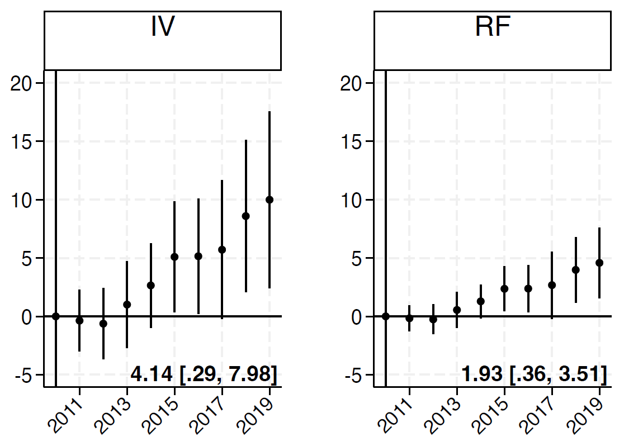
We quantify the impact of federal subsidies for graduate medical education on primary care physician (PCP) supply by examining the impact of Section 5503 of the Affordable Care Act, which increased the number of residents that teaching hospitals in rural and high-need areas could receive subsidies for training. Instrumenting for selection into the program using its eligibility criteria, we find that the provision increased both recruitment of residents into primary care and time spent at teaching hospitals in high-need areas, resulting in a 4.1% increase in PCP supply.
Estimated effects of the education reform on teen births
Journal of Economic Behavior and Organization, August 2025 · IZA DP No. 16791

Improvements in Schooling Opportunities and Teen Births
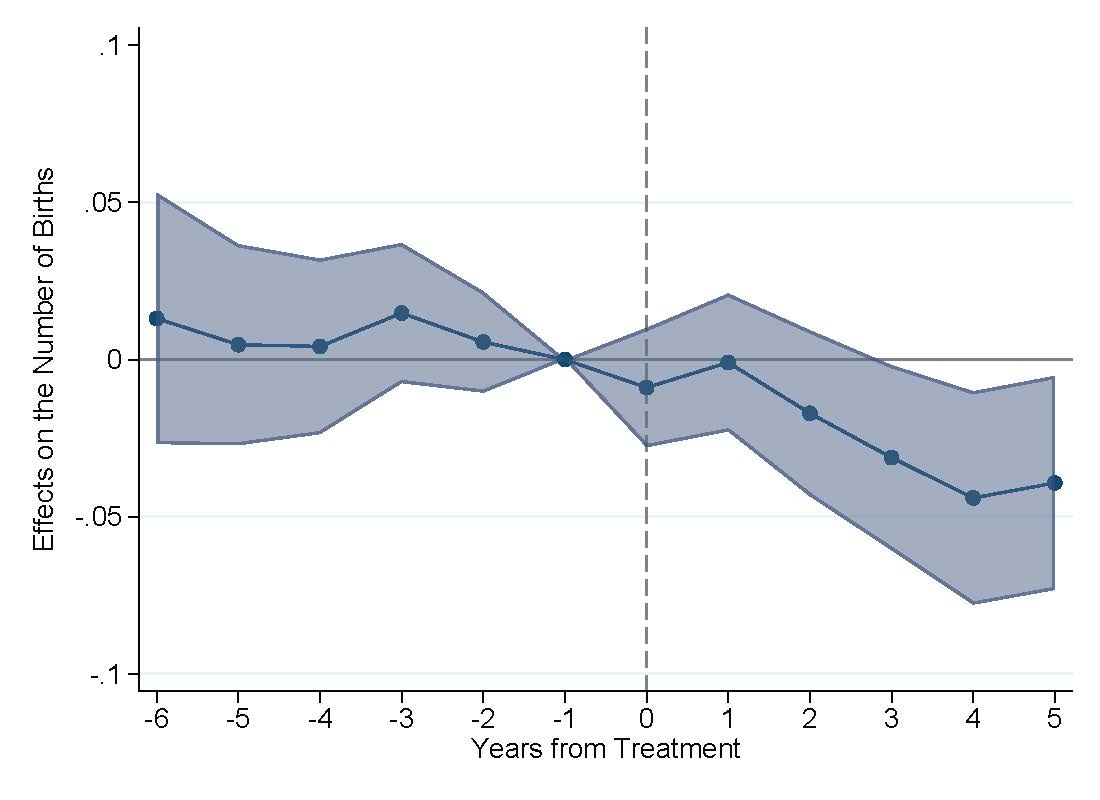
We study the causal relationship between educational attainment and teenage birth rates by focusing on a large-scale, country-wide reform that made high school compulsory and removed previously existing school capacity constraints in Mexico. Relying on administrative data on schools and births, we implement a difference-in-differences strategy that exploits variation across time and municipality-level exposure to the reform to explore the effects of expanding educational opportunities on teenage fertility. We find that teenage birth rates decreased by 2.8 percent after the education reform in municipalities with high increases in high school availability relative to municipalities with low increases. Our findings suggest that this decline is not driven by a reduction in the time teenagers had to engage in risky behaviors.
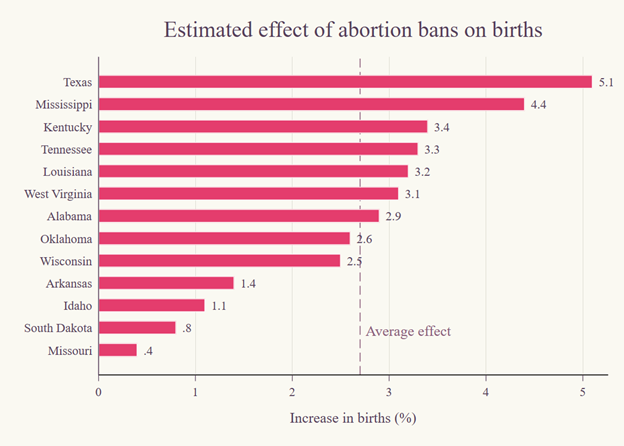
Effects of abortion bans on births by state
Journal of Public Economics, June 2024 · IZA DP No. 16608

The Effects of the Post-Dobbs Abortion Bans on Fertility
The U.S. Supreme Court decision in Dobbs v. Jackson Women's Health Organization sparked the most profound transformation of the landscape of abortion access in 50 years. We provide the first estimates of the effects of this decision on fertility using a pre-registered synthetic difference-in-differences design applied to newly released provisional natality data for the first half of 2023. The results indicate that states with abortion bans experienced an average increase in births of 2.3 percent relative to states where abortion was not restricted.
Impacts of admitting privileges law implementation on black teen birth rates
Journal of Public Economics, June 2024 · IZA DP No. 14837

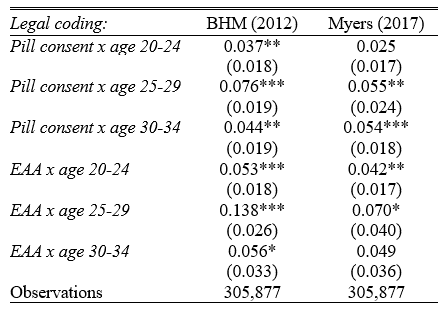
TRAP'd Teens: Impacts of Abortion Provider Regulations on Fertility & Education
Following the 2022 decision of the U.S. Supreme Court, Dobbs v. Jackson Women's Health, several U.S. states have severely restricted or eliminated access to abortion. To shed light on the potential economic impacts of this landmark ruling, we estimate the impact of abortion access on women's educational attainment. We first codify the legal history of all targeted regulations of abortion providers (TRAP laws) ever implemented. We document that TRAP laws increased teen births by more than 3 percent and offer evidence that these impacts are driven by reductions in abortion access and abortion use. We further document that exposure to TRAP laws before age 18 reduces college initiation by 2.1 percent and college completion by 5.8 percent among Black women. For White women, despite comparable impacts on teen births, educational impacts are on college completion only, are less than half as large, and are not robust. Our findings suggest that modern abortion restrictions affect women's economic participation and contribute to racial inequality.
Average distance from a county in Louisiana to the nearest abortion facility
American Journal of Public Health, May 2024

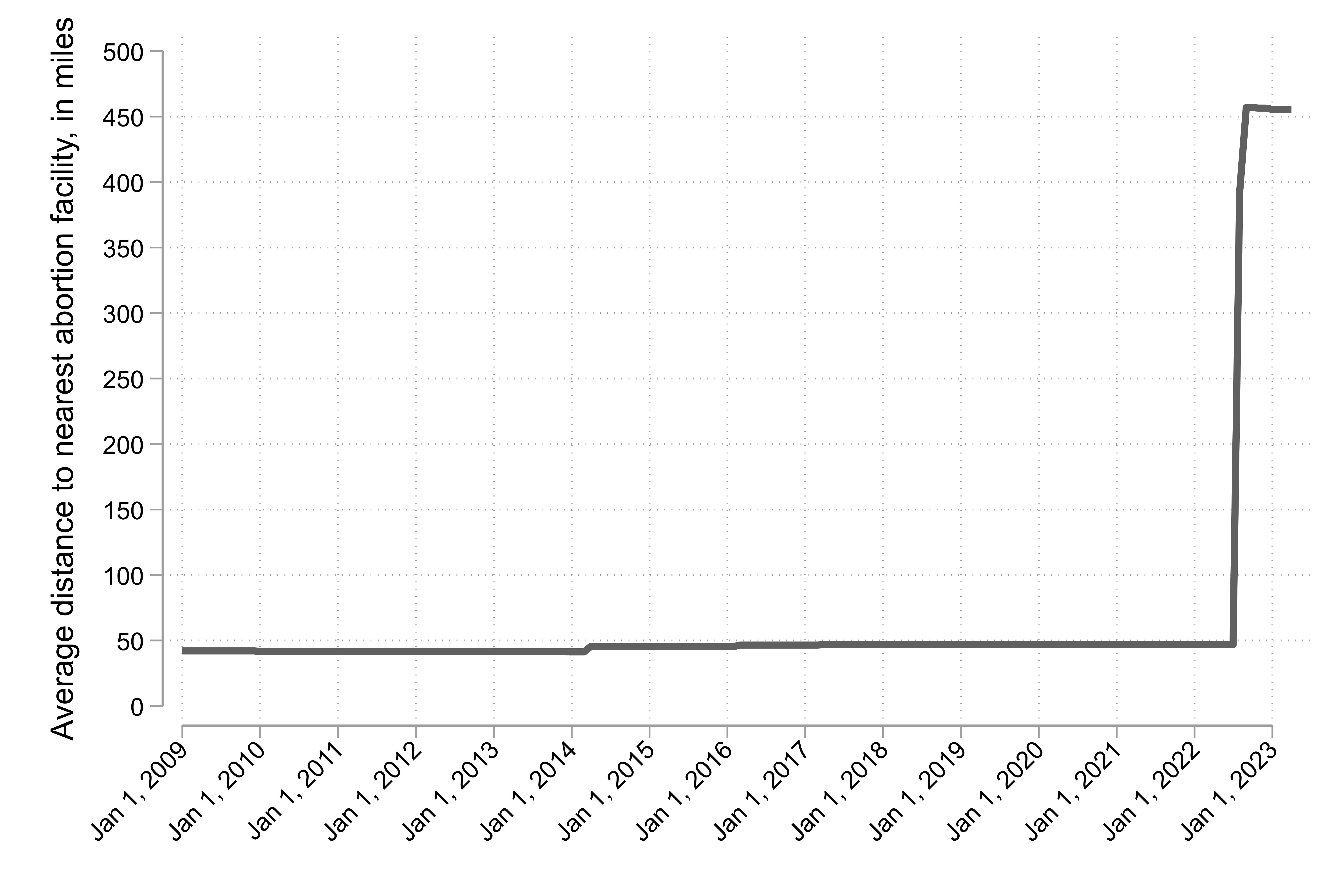
Looking Back: The Changing Landscape of Abortion Care in Louisiana
In August 2021, Roberts et al. published a research article in AJPH showing that pandemic-related lockdowns and legal restrictions led to a 31% decline in the number of abortions per month in Louisiana but an increase in the likelihood of obtaining a second-trimester abortion. In this editorial, we examine how COVID-19 and the Dobbs decision have impacted abortion services in Louisiana since the publication of this influential article. Concerns raised by Roberts et al. about the negative effects of clinic closures have only grown since their prescient study.
Percentage change in mobility near abortion clinics
Frontiers in Global Women's Health, March 2023

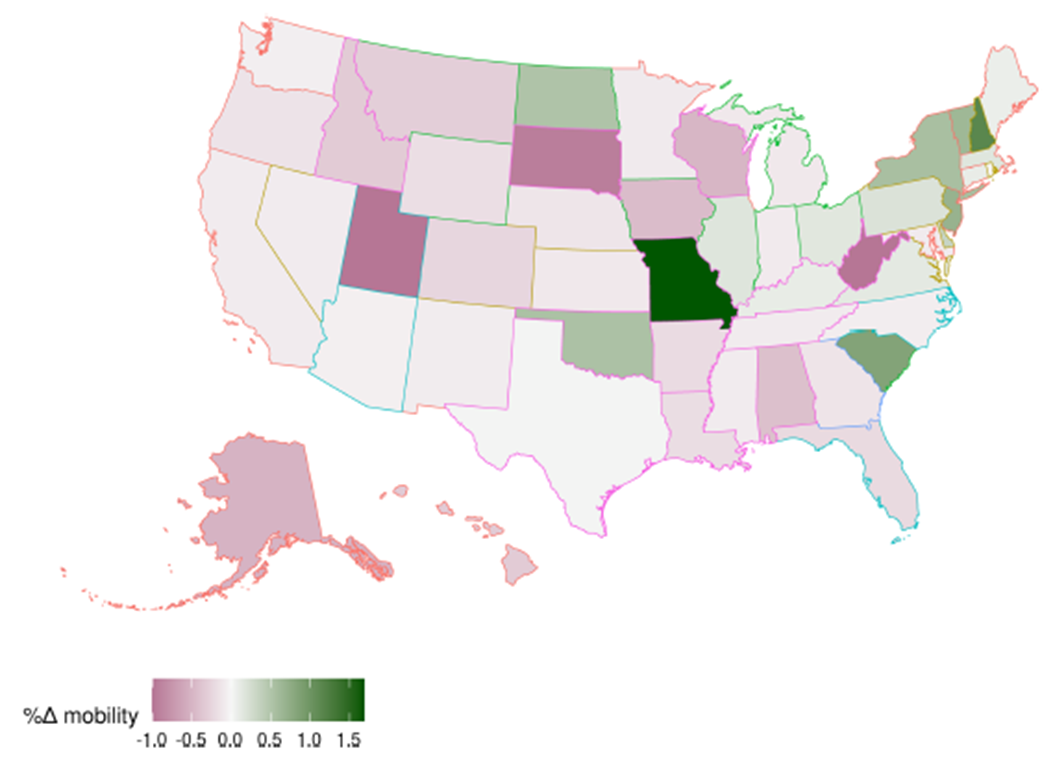
Texas Senate Bill 8 Significantly Reduced Travel to Abortion Clinics in Texas
The Dobbs v. Jackson decision by the United States Supreme Court has rescinded the constitutional guarantee of abortion across the United States. As a result, at least 13 states have banned abortion access with unknown effects. Using Texas SB8 law that similarly restricted abortions in Texas, we provide insight into how individuals respond to these restrictions using aggregated and anonymized human mobility data. We find that Texas SB 8 law reduced mobility near abortion clinics in Texas by people who live in Texas and those who live outside the state. We also find that mobility from Texas to abortion clinics in other states increased, with notable increases in Missouri and Arkansas, two states that subsequently enacted post-Dobbs bans. These results highlight the importance of out-of-state abortion services for women living in highly restrictive states.
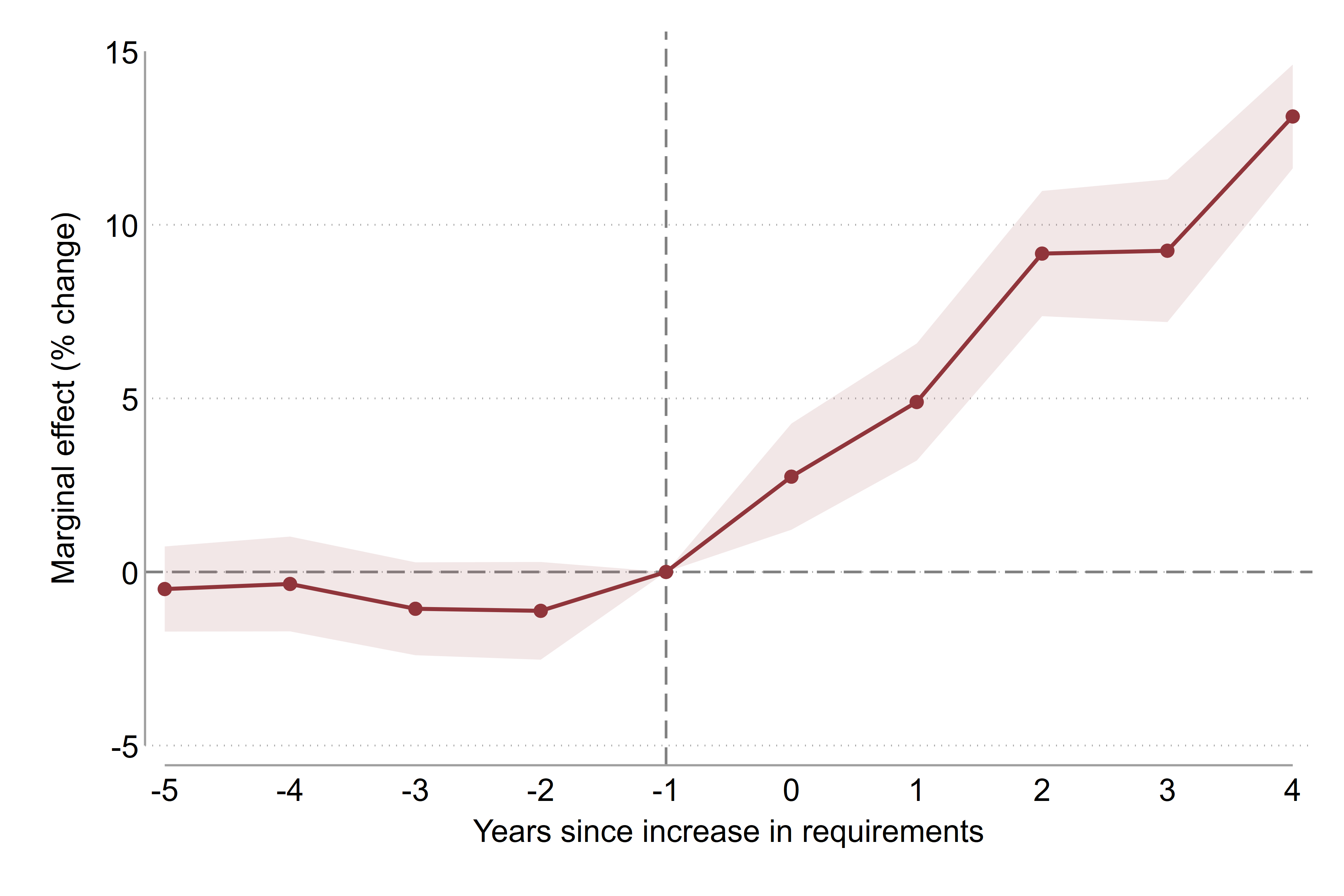
Percent of abortions in the second trimester
Journal of Health Economics, December 2021 · NBER WP No. 26228

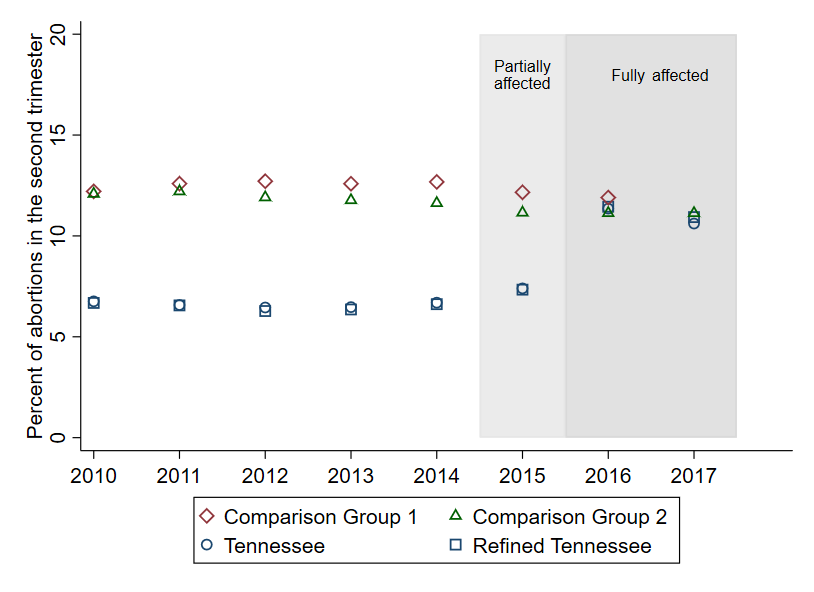
New Evidence on the Effects of Mandatory Waiting Periods for Abortion
Beyond a handful of studies examining early-adopting states in the early 1990s, little is known about the causal effects of mandatory waiting periods for abortion. In this study, we evaluate the effects of a Tennessee law enacted in 2015 that requires women to make an additional trip to abortion providers for state-directed counseling at least 48 hours before they can obtain an abortion. Our difference-in-differences and synthetic-control estimates indicate that the introduction of the mandatory waiting period caused a 53–69 percent increase in the share of abortions obtained during the second trimester. Our analysis examining overall abortion rates is less conclusive but suggests a reduction caused by the waiting period. To put these estimates into context, we provide back-of-the-envelope calculations on the additional monetary costs that Tennessee's MWP imposes on women seeking abortions.
Effects of The Pill and abortion access on working in an SS-covered job
Papers and Proceedings, 2020

Legal Access to Reproductive Control Technology, Women's Education, and Earnings Approaching Retirement Outcomes

We investigate how historical changes in contraception and abortion access impact women's long-run outcomes. We use data from the Health and Retirement Study and an identification strategy that leverages variation in exposure to legal changes in access across cohorts born in the same states during the 1960s and 1970s. Our results for educational attainment align with prior work but are not statistically significant. The results for earnings indicate increases in the probability of working in a Social Security (SS) covered job in women's 20s and 30s associated with early access to contraception and abortion, but we find no evidence of positive effects on women's earnings in their 50s.
  • Quantifying Public Policies: Lessons from TRAP Law Data Creation (with Kelly Jones)
  • What Drives Philanthropy for Health (with Kelly Jones & Ivy Zheng)
  • What is the Potential for Dobbs to Impact Economic Well-Being? (with Kelly Jones)
  • Evolving Trends in Contraceptive Choice: Understanding the Role of Medical Providers (with Savannah Ellison, Melanie Guldi & Sarah Rosenberg)
  • ACA Medicaid Expansion and Contraceptive Provision to Teens (with Savannah Ellison, Melanie Guldi & Sarah Rosenberg)

Instructor of Record · Georgia Institute of Technology

ECON
4510

The Economics of Health and Healthcare

Fall 2022, Spring 2023, Fall 2023, Fall 2024, Fall 2025, Fall 2026

This course surveys theoretical and empirical evidence on current health and healthcare issues in the United States, including individual-level models of health behavior, demand for health and medical insurance, and the economic behavior of physicians, hospitals, and insurers.

ECON
4803

The Economics of Risky Health Behaviors

Fall 2023, Fall 2024, Fall 2025, Fall 2026

Examines risky health behaviors—smoking, alcohol use, drug use, risky sex, poor diet, and physical inactivity—responsible for thousands of preventable illnesses and deaths and billions in medical costs each year.

My full CV is available to download below.

Download CV (PDF)
Email mpinedat[at]gatech.edu
Office Old Civil Engineering, 221 Bobby Dodd Way NW, Suite 220
Atlanta, Georgia 30332
Mailing Address 221 Bobby Dodd Way, Suite 220, M/C 0615
Atlanta, GA 30332
Elsewhere X  ·  LinkedIn